
ECO‑GSC‑LDC is an R&D and industrial innovation project aiming to significantly reduce the energy consumption and environmental footprint of high‑performance and enterprise computing infrastructures.

Supercomputing and AI systems designed for large language models can incorporate tens or hundreds of thousands of compute nodes. At the heart of these massive systems lies the interconnect, the backbone that dictates overall performance.

The integration of intelligent systems in industry is booming due to the potential improvements they offer in terms of reducing time, simplifying complex tasks and automating them. A key aspect to consider is security from the outset to avoid vulnerability to cyber-attacks.
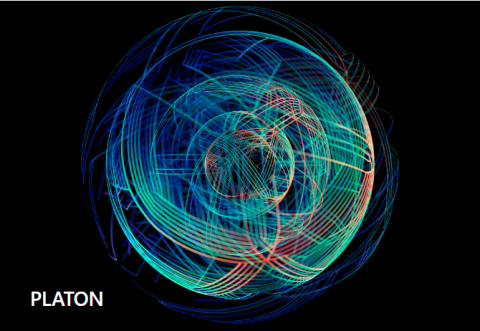
PLATON is a national project (funded under the Next Generation scheme) driving the transition from traditional electricity distribution networks to smart distribution networks.

6G-OPENSEC aims to provide security, trust, and quantum key distribution (QKD) solutions for 6G transport networks through an open and flexible architecture.6G-OPENSEC is divided into three subprojects:

6GDAWN focuses on scalable and distributed management plane design to support massive deployment of network slices to enable services like XR applications.

EUPEX leverages the best of the assets developed in previous H2020 projects to design, build and validate the first HPC platform integrating the full spectrum of European HPC technologies, from architecture, processors and interconnect to system software.

SILVANUS envisages to deliver an environmentally sustainable and climate resilient forest management platform through innovative capabilities to prevent and combat against the ignition and spread of forest fires. The platform will cater to the demands of efficient res
ERATOSTHENES project started in October 2021.

The H2020 IRIS project aimed to deliver a framework to support European CERT and CSIRT networks detecting, sharing, responding and recovering from cybersecurity threats and vulnerabilities of IoT and AI-driven ICT systems, in order to minimize the impact of cybersecurity and privacy risks.

The objective is to interconnect the information along the life of a product, from concept to retirement, so that it can be easily accessed and shared. This will allow you and others to make decisions at all stages to shift to a circular economy.

The ARCADIAN-IoT project will accelerate the development of IoT systems towards decentralized, transparent and user controllable privacy in three real use cases:

Multi-morbid complex chronic conditions (CCCs) are highly prevalent in patients with Chronic Obstructive Pulmonary Disease (COPD) and timely and preventive care is essential.
Artificial intelligence (AI) is one of the key technologies shaping the future of the internet and the world. With a greater number of applications than ever before, significant progress has been made in the performance and accuracy of AI-based solutions.
The EU-funded PHYSICS project is empowering European cloud service providers to leverage cutting-edge, scalable and cost-effective cloud models, such as function-as-a-service (FaaS) ones, operated across multiple hardware types, locations, edge computing nodes and multi-cloud res
HUB4CLOUD is a Coordination & Support Action project aiming to contribute to transform the current community of Cloud Computing researchers and innovators in Europe into an increasingly cohesive, dynamic, participatory and sustainable eco
The AI-on-demand regional platforms built by DIH4AI are based on an Innovation & Collaboration platform developed in the H2020 European project MIDIH.

MARVEL aspires the convergence of a set of technologies in the areas of AI, analytics, multimodal perception, software engineering, HPC as part of an Edge-Fog-Cloud Computing Continuum paradigm, to support data-dr